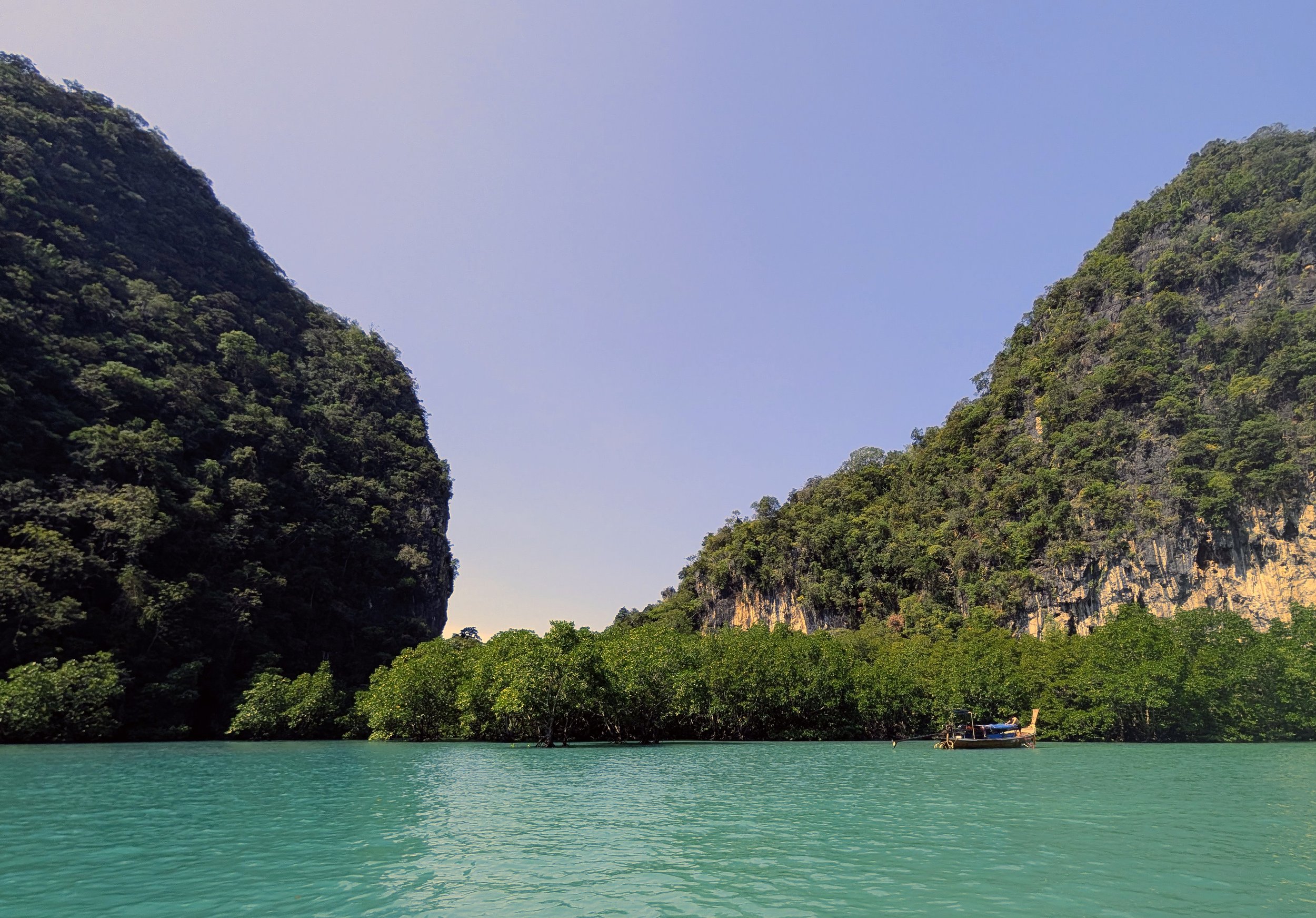
I recently took some much-needed time off to visit Thailand, specifically the coastal beauty of Krabi.
Admittedly, Krabi wasn’t originally at the top of my travel list. However, with family getting married there, it made the journey an easy decision to make.
It turns out, it was exactly what I needed.
The food was incredible and everyone we encountered was remarkably warm and hospitable. But the true standout was the sheer natural beauty of the region.
From the crystal-clear water to the dramatic limestone cliffs, the landscape is nothing short of stunning.
Exploring the "Blue" in Blue Carbon
We spent time island-hopping through iconic locations—spots made famous by films like The Man with the Golden Gun and The Beach.
While those vistas were breathtaking, it was our time kayaking through inland channels that really left an impression.
Paddling through the dense mangrove forests and navigating coastal sea caves, I began to see these areas as more than just a tourist backdrop.
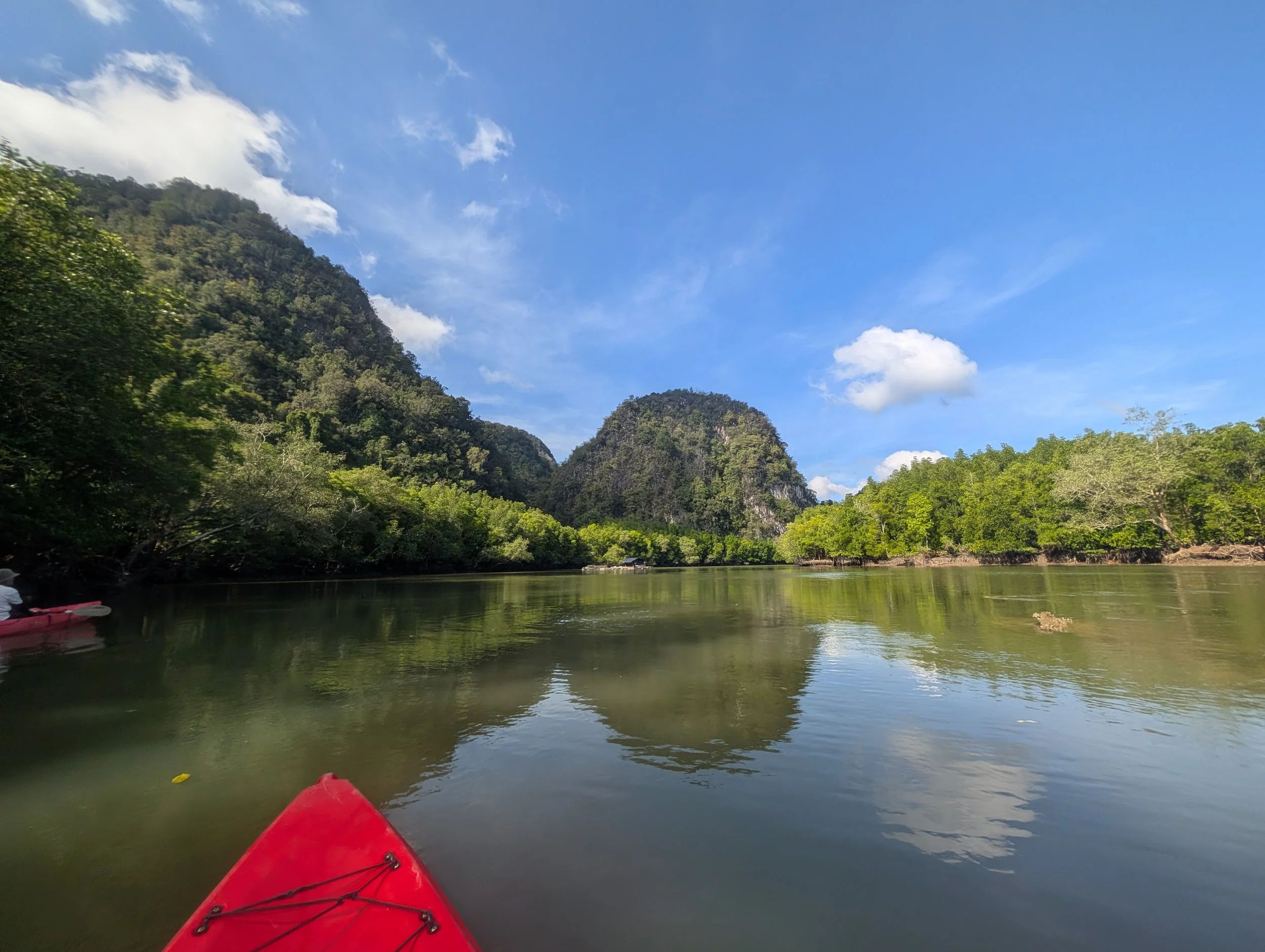
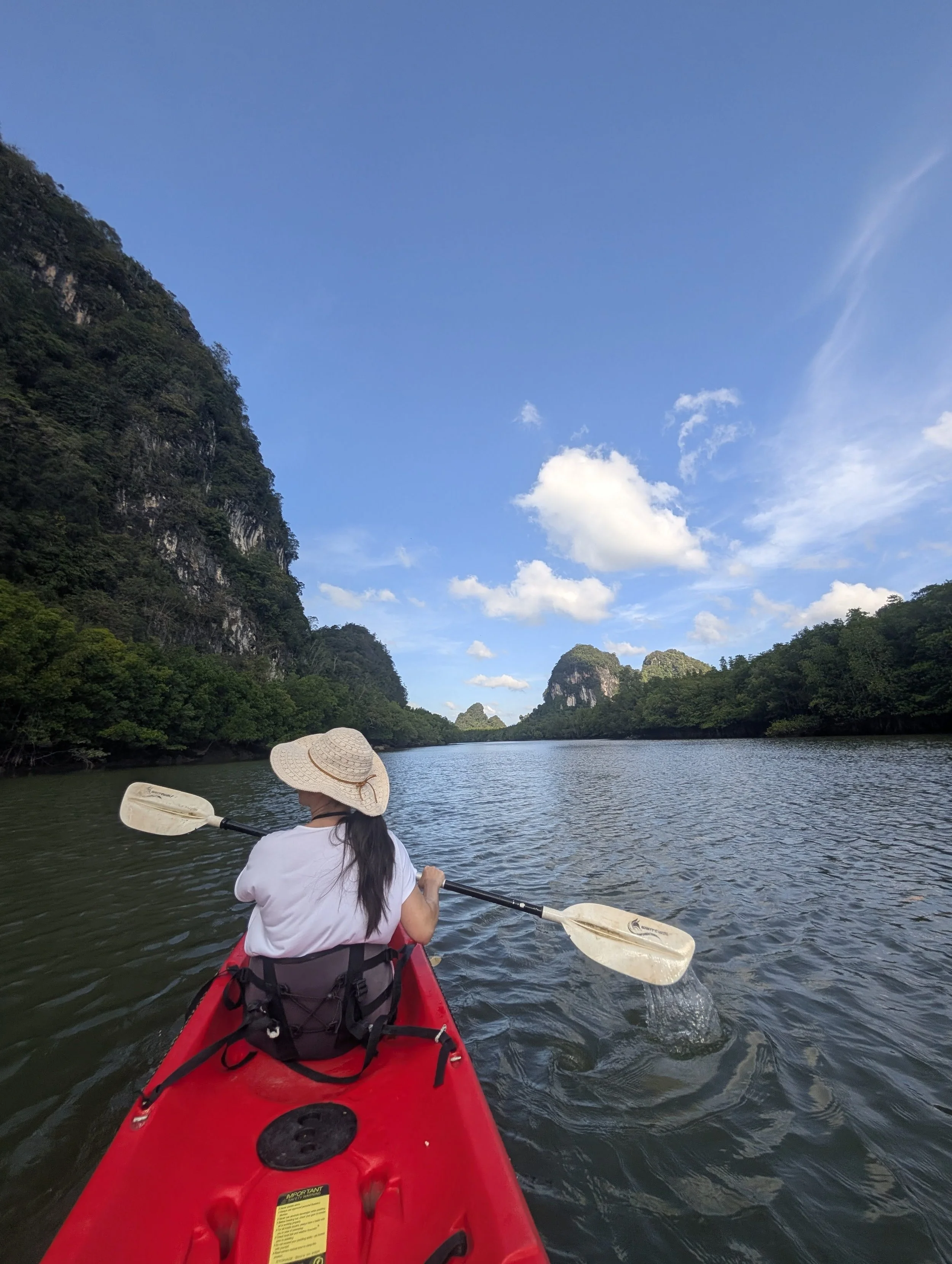
They are vibrant, living lungs for the planet.
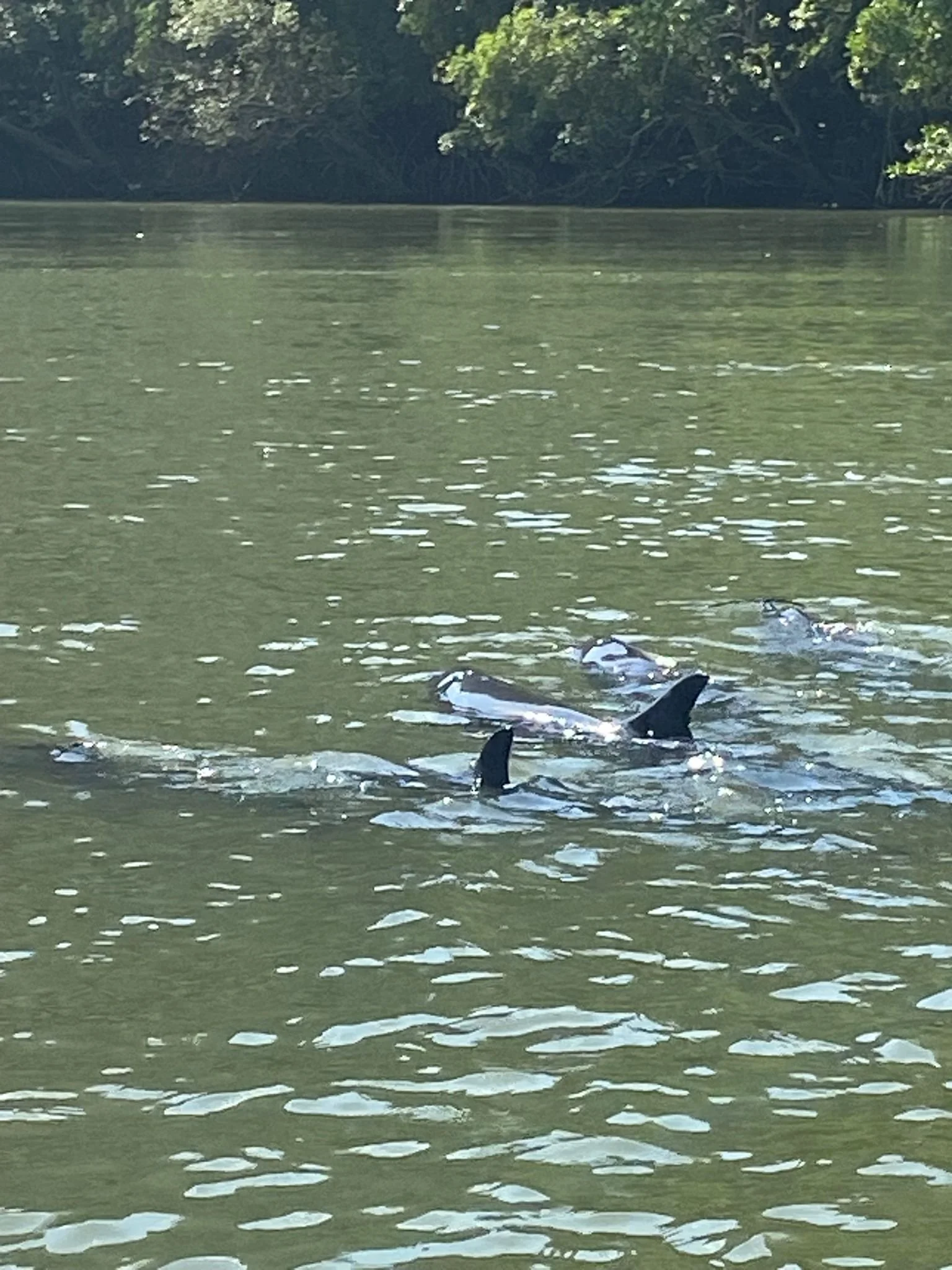
We watched monkeys descend to the waterline to investigate us funny-looking humans, and we were even treated to a rare pod of dolphins—a sighting our guide said was incredibly special in these waterways and likely spurred by recent storms.
The Power of Mangroves
It was during these quiet moments on the water that the importance of these ecosystems hit home.
They aren't just scenery; they are a lifeline for both local businesses, native wildlife, and global health alike. Mangroves are unique coastal forests that also serve as critical buffers against storm surges and erosion.
Just consider a couple of staggering statistics:
Despite covering only 0.1% of the planet’s surface, mangroves are responsible for an estimated 14% of all coastal carbon sequestration globally.
Mangroves absorb CO2 and store it in their roots and waterlogged soil. Because the low-oxygen environment slows decomposition, that carbon remains trapped for centuries.
Why I’m Supporting SeaTrees
This is why I’m so excited to support a local non-profit, SeaTrees. I’ve long supported SeaTrees for their work in planting and restoring kelp and mangrove forests. However, seeing these ecosystems firsthand while in Thailand reinforced my appreciation for their mission.
These forests support local economies, protect wildlife, and act as one of our most powerful natural solutions to climate change.
As the year comes to a close and I reflect on my year-end giving, I’m excited to increase my support for SeaTrees. I encourage you to join me because protecting these "blue" forests is one of the most effective ways we can sustain the health of our planet.