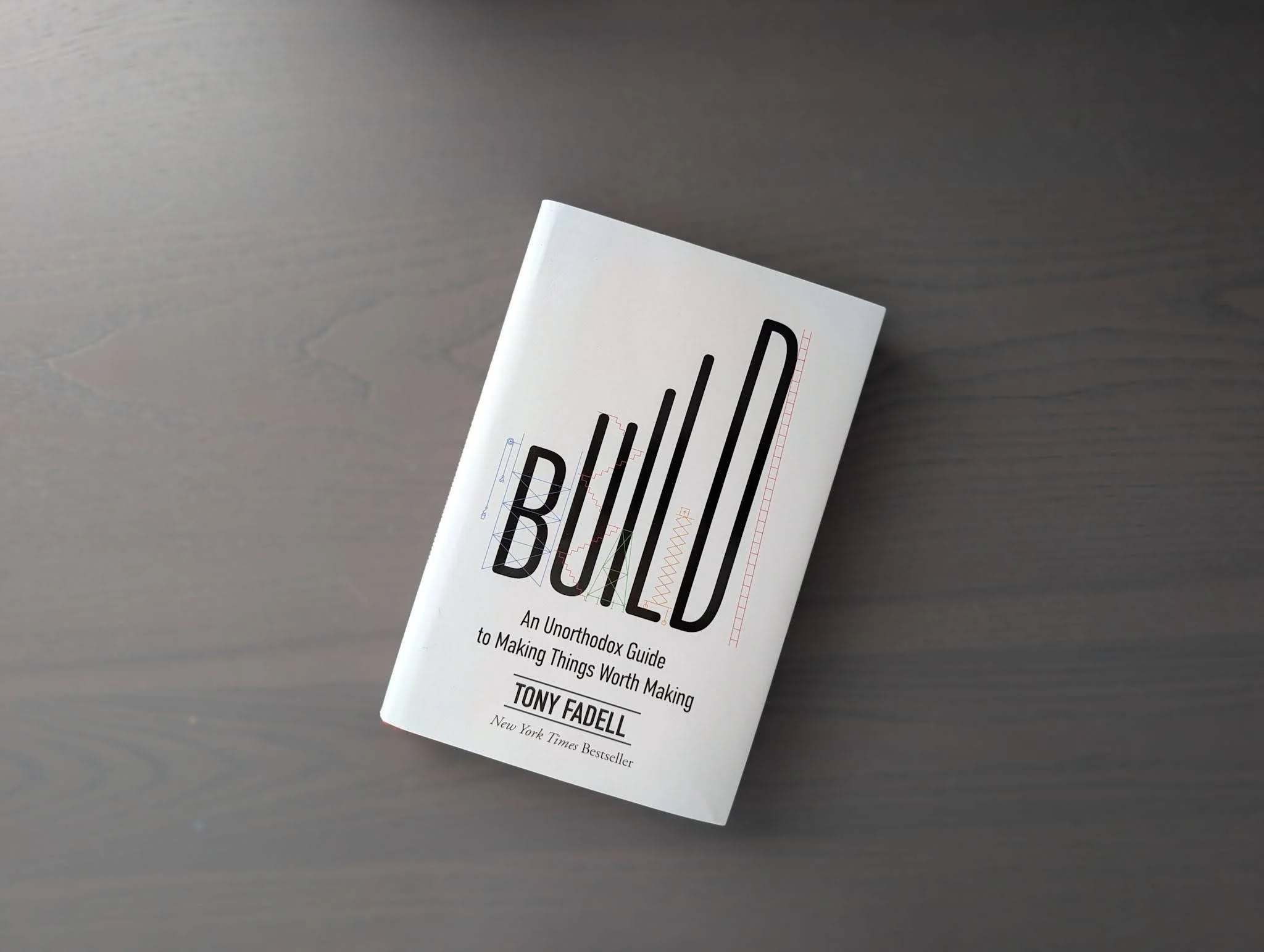
I don't know what took me so long to read Build by Tony Fadell, but I'm glad I finally did. It's been on my list for ages, and it ended up being one of the better business books I've read in a while. Good enough that I wanted to write down a few things that stuck with me.
Build is framed as an entrepreneur's memoir where Fadell walks through his path from General Magic to Philips to Apple (where he led the iPod and iPhone hardware teams) to founding Nest and its rocky handoff into Google. But you don't need to be starting a company to get something out of it. It's really a book about building anything worth building, including a product, a team, a culture, and the lessons land whether you're a founder, a manager, or an individual contributor.
What comes through most is how much Fadell learned by doing. Despite his resume and trajectory, being associated with iconic companies and products, he didn't pretend to have all the answers; he surrounded himself with people who knew better than he did, and he's candid about the mistakes along the way. That honesty is what makes the culture chapters hit. His warnings about letting "brilliant jerks" poison a team are painfully relatable to anyone who's worked around one. And his chapters on burnout stand out precisely because he doesn't fit the always-on founder stereotype you'd expect. He's clearly obsessive about the work, but he's just as clear that rest isn't optional. Instead, it's precisely what lets you come back with the energy and perspective to actually build well.
Where the book really landed for me, though, was on marketing. Fadell is a hardware and product guy first, but his time at Apple—sitting close to Steve Jobs, the master storyteller himself—clearly shaped how he thinks about brand. His point isn't that you need clever advertising. It's that marketing is the discipline of finding the why before you obsess over the what. A product doesn't sell itself just because the technology is good; it sells because people understand, viscerally, the problem it solves for them. In practice, that's of course much easier said than done, but I really enjoyed the stories he tells about actually pulling it off during his time at Apple and Nest.
He puts it simply: “The best ideas are painkillers, not vitamins."
A few takeaways that stuck with me:
Find the pain, not the nice-to-have. Before you ship anything, ask what real pain it removes. If you can't answer that clearly, you're building a vitamin, and vitamins are easy to ignore.
Always be iterating. Fadell is blunt that V1 is never good enough, and that's fine. The point is to start. The first iPod only really landed with Mac enthusiasts; it took until the third generation for it to become the cultural phenomenon we all remember. Progress beats perfection, every time.
Brand is everything, all the time. Your customer doesn't separate your ad from your app from your support team. To them, it's all just your brand. That's a useful gut-check for marketers: every touchpoint should be telling the same story, whether you're managing it or not.
Burnout is real, and rest is part of the job. Fadell isn't preaching balance for its own sake. He's making the case that protecting your energy is what lets you keep building well over the long run.
If you're in marketing, product, or just building something you care about, Build is worth the read.